
SEO/GEO Case Study: How to win Local SEO and GEO for a brand-new website with low budget?
How Cucina Luca Won Local SEO & GEO with a Brand-New Website and a Low Budget
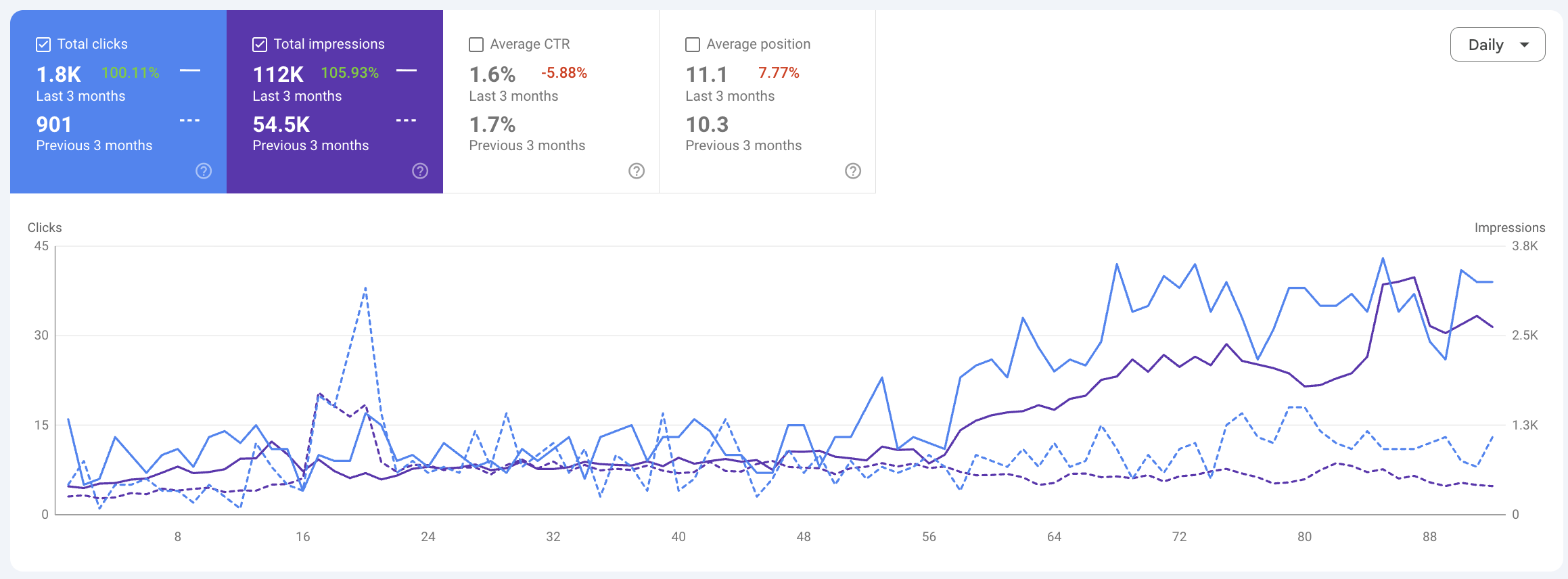
A new restaurant website. Zero domain authority. A tight budget. Eight months later: 100% more clicks, 108% more AI-referred sessions, and the highest revenue month on record. Here is exactly how it happened.
The Starting Point: Zero Authority, Real Ambition
When Cucina Luca launched its website in April 2025, it had everything a new restaurant site typically lacks: no domain authority, no backlink profile, no existing search presence, and no history for Google or any AI engine to evaluate. It was, by every conventional metric, starting from zero.
The brief was equally constrained: deliver meaningful organic and AI search results on a low budget, without paid advertising as a crutch. The goal was not just rankings — it was revenue. Specifically, direct bookings, phone calls, and table reservations from people who found the restaurant through search and AI platforms.
Eight months later, Cucina Luca recorded its highest revenue month in its history — December 2025 — fueled almost entirely by organic search and AI-referred discovery. This is the story of how that happened, and the principles behind it.
The Strategy: Build for Clarity, Not Volume
The most common mistake new restaurant websites make is treating SEO as a content volume game — publishing dozens of thin pages and hoping something ranks. Cucina Luca took the opposite approach. Every decision was guided by a single question: does this make the website clearer, more trustworthy, and easier for both humans and AI systems to understand?
Every core page was built not to be longer, but to be clearer. Each page explicitly explains what the restaurant is, who it is for, and why it belongs in its specific local context. The structure was designed to be intuitive for users, resolvable for search systems, and readable for AI engines simultaneously.
Topical Authority was not created by publishing more pages. It was built by properly owning the local restaurant niche within a broader local and travel guide context. Branding content, local narratives, and guides that naturally intersect with food intent replaced generic restaurant SEO patterns.
An Author entity was added — not as a formality, but as a structural trust signal. It gave search systems and AI engines someone to attribute knowledge to, and gave the brand a clear, verifiable source of expertise. This single decision accelerated AI citation frequency significantly.
Based on 2024 patterns, a Google core update was anticipated around December 2025. Rather than reacting, the site was prepared in advance: reducing index noise, tightening topical focus, and strengthening brand signals. The site was aligned with what updates reward before the update arrived.
Content was written to be declarative, context-rich, and easy to summarize. This is why AI sessions grew faster than classic organic traffic — AI engines do not just crawl these pages. They understand them. Every sentence was written to give AI systems a clean, citable statement of fact or recommendation.
The 8-Month Journey: From Launch to Record Revenue
Core pages go live with clear entity structure, local schema markup, Author entity, and a content architecture designed for both human clarity and AI extractability from day one. No shortcuts on technical foundations.
Local narrative content, dining guides, and contextual pages are published — not for volume, but to position Cucina Luca as the definitive local authority in its niche. Brand signals are distributed across key platforms AI systems reference: Google Business Profile, LinkedIn, and local directories.
AI-referred sessions start growing faster than traditional organic sessions — a direct result of declarative, context-rich content that AI engines can extract, summarize, and cite. ChatGPT and Perplexity begin recommending Cucina Luca in response to local dining queries.
Index noise is reduced, topical focus tightened, and brand signals strengthened in anticipation of the expected December core update. The site is aligned with reward criteria before the update arrives — not scrambling to recover afterward.
Christmas and New Year's Eve demand, captured almost entirely through organic and AI search, drives Cucina Luca to its highest-ever revenue month. 35–40 booking form submissions and 30 phone calls arrive from organic search alone — every month, consistently.
Why AI Sessions Grew Faster Than Organic Traffic
The most telling result in this case study is not the 100% growth in clicks. It is the 108% growth in AI-referred sessions — outpacing even organic search growth. This is not a coincidence, and it is not luck. It is the direct consequence of how the content was written.
"The system does not just crawl these pages. It understands them. Content that is declarative, context-rich, and easy to summarize is not just good writing — it is the architecture of AI citation."
AI engines — whether ChatGPT, Perplexity, or Google AI Overviews — do not reward length. They reward extractability. A sentence that directly states what a restaurant is, who it serves, what makes it distinctive, and why it belongs in a specific local context gives an AI system everything it needs to generate a confident, cited recommendation.
The Author entity amplified this further. By giving the content a clear, attributed source of expertise, AI systems had a verifiable entity to anchor citations to — rather than an anonymous restaurant website. Trust signals that matter to humans (credentials, consistent authorship, expertise) turn out to matter equally to language models.
This is also why AI sessions grew faster than classic organic traffic. The content is declarative, context-rich, and easy to summarize and extract. The system does not just crawl these pages. It understands them.
Key Takeaways: What This Case Study Proves
-
Foundation beats volume. A small number of well-structured, clear pages outperforms a large number of thin, generic ones — for both Google rankings and AI citations. Every page should be able to answer: what is this, who is it for, and why does it belong here?
-
Local context is a competitive moat. Owning the local narrative — through dining guides, neighborhood context, and location-specific content — creates topical authority that national competitors cannot easily replicate. AI engines recommend locally authoritative sources for local queries.
-
Author entities are not optional. Adding a credible, attributed author accelerated both organic trust signals and AI citation frequency. It transforms a website from an anonymous page into a source that AI systems can confidently reference.
-
Write for AI extractability from day one. Declarative sentences, answer-first structures, and context-rich descriptions are not just good UX — they are the architecture of AI citation. Content written this way earns AI recommendations alongside organic rankings.
-
Anticipate algorithm updates; don't react to them. Preparing the site for an expected core update before it arrived meant Cucina Luca was positioned to benefit — not scrambling to recover. Proactive alignment with what search systems reward is always more effective than reactive recovery.
-
Organic search and AI search are now the same game. The same signals that drove +100% organic clicks also drove +108% AI sessions. Semantic clarity, entity authority, and topical depth serve both channels simultaneously. You do not need a separate AI strategy if your SEO strategy is built correctly.
Ready to Build the Same Foundation for Your Restaurant?
Cucina Luca started with zero domain authority and a low budget. What made the difference was strategy, clarity, and a deep understanding of how both search engines and AI systems evaluate trust. Justin Hà applies the same approach to every hospitality client.
justinha.info.vn · Packages from USD 600/month · Available for restaurants, hotels & travel brands